July 1, 2026
HVAC duct repair in Boise is one of the most overlooked fixes a homeowner can make – yet it’s often the reason your energy bills are high, your rooms feel stuffy, and your heating or cooling system works harder than it should.
Here’s a quick answer to what you need to know:
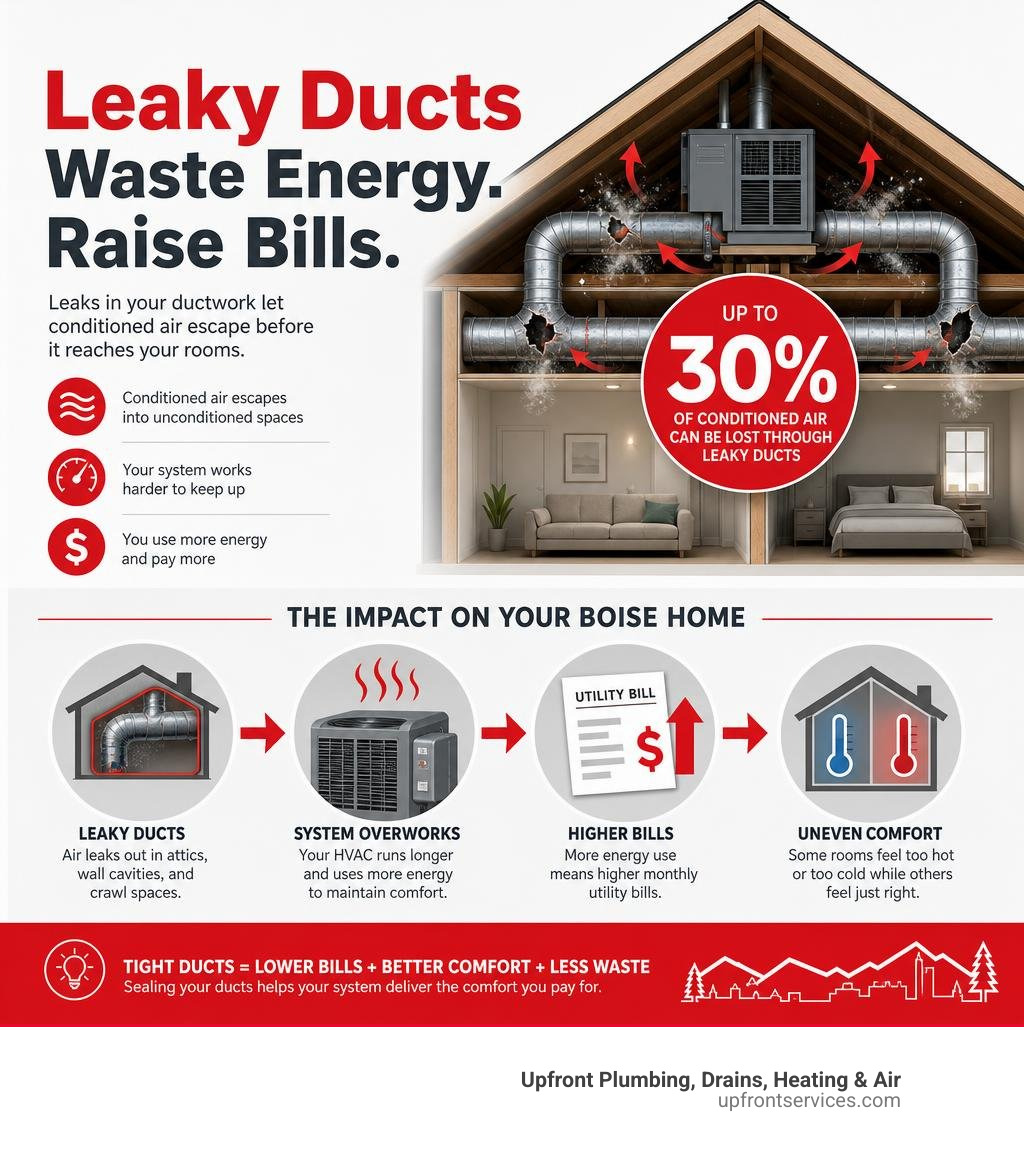
Your ductwork runs behind walls, above ceilings, and beneath floors – completely out of sight. That makes it easy to ignore. But according to the U.S. Department of Energy, leaky ducts can lower your home’s energy efficiency by up to 30%. In Boise, where summers push air conditioners hard and winters demand serious heat, that waste adds up fast.
What makes duct problems tricky is that they often look like HVAC problems. Your system seems fine. But the real culprit is the network of ducts delivering – or failing to deliver – that conditioned air to every room.
With years of hands-on experience solving HVAC duct repair in Boise and across the Treasure Valley, this guide walks you through everything you need to make a smart, confident decision about your ductwork.
Basic HVAC duct repair Boise vocab:
When you turn on your heater in January or your air conditioner in July, you expect comfort. Your HVAC system works hard to condition the air, but without a sealed, fully functioning duct system, that expensive air never reaches its destination. Think of your ductwork as the circulatory system of your home. If there is a major leak, your system effectively “bleeds” energy into unconditioned spaces like your attic, crawlspace, or basement.
This air loss forces your heating and cooling equipment to run longer cycles to reach your thermostat’s target temperature. Over time, this constant strain shortens the lifespan of your expensive furnace or heat pump. If your system is already struggling under this extra workload, you might find yourself in need of rapid assistance. For those moments, check out our guide on Emergency HVAC Near Me: A Guide to Rapid Relief to understand how to handle sudden system failures.
Additionally, leaky ducts create a dangerous phenomenon known as negative pressure. When supply ducts leak air into the attic, the home tries to balance itself by pulling air back in through any crack it can find. This often pulls unconditioned, dusty, and contaminated air from crawlspaces and wall cavities directly into your living spaces. By investing in professional HVAC duct repair Boise, you stop this cycle, protect your mechanical equipment, lower your monthly utility bills, and ensure your family breathes clean, filtered air.
Boise’s climate features dramatic seasonal swings. We experience freezing, snowy winters and hot, dry summers where temperatures routinely climb into the high 90s and 100s. These temperature fluctuations place unique physical stress on residential duct systems.
When ductwork is run through unconditioned attics or crawlspaces, the extreme temperature differences cause metal ducts to expand and contract. Over time, this movement loosens joints and degrades sealing materials. In older homes across Boise, Nampa, and Caldwell, we frequently find ductwork that has completely separated at the joints, dumping 100% of the conditioned air into the crawlspace.
Moisture infiltration is another major issue in the Treasure Valley. When warm, humid air meets poorly insulated cold ducts in the summer, condensation forms. This moisture can ruin drywall, destroy duct insulation, and create a breeding ground for mold and mildew. Once mold takes hold inside your ducts, it spreads spores throughout your entire home every time the fan kicks on.
Whether you need assistance in Garden City, Eagle, Caldwell, or anywhere else in the Treasure Valley, addressing these regional climate challenges promptly is key to maintaining a healthy home.
Because your ducts are hidden, you have to rely on secondary clues to know when they are failing. Keep an eye out for these common warning signs:
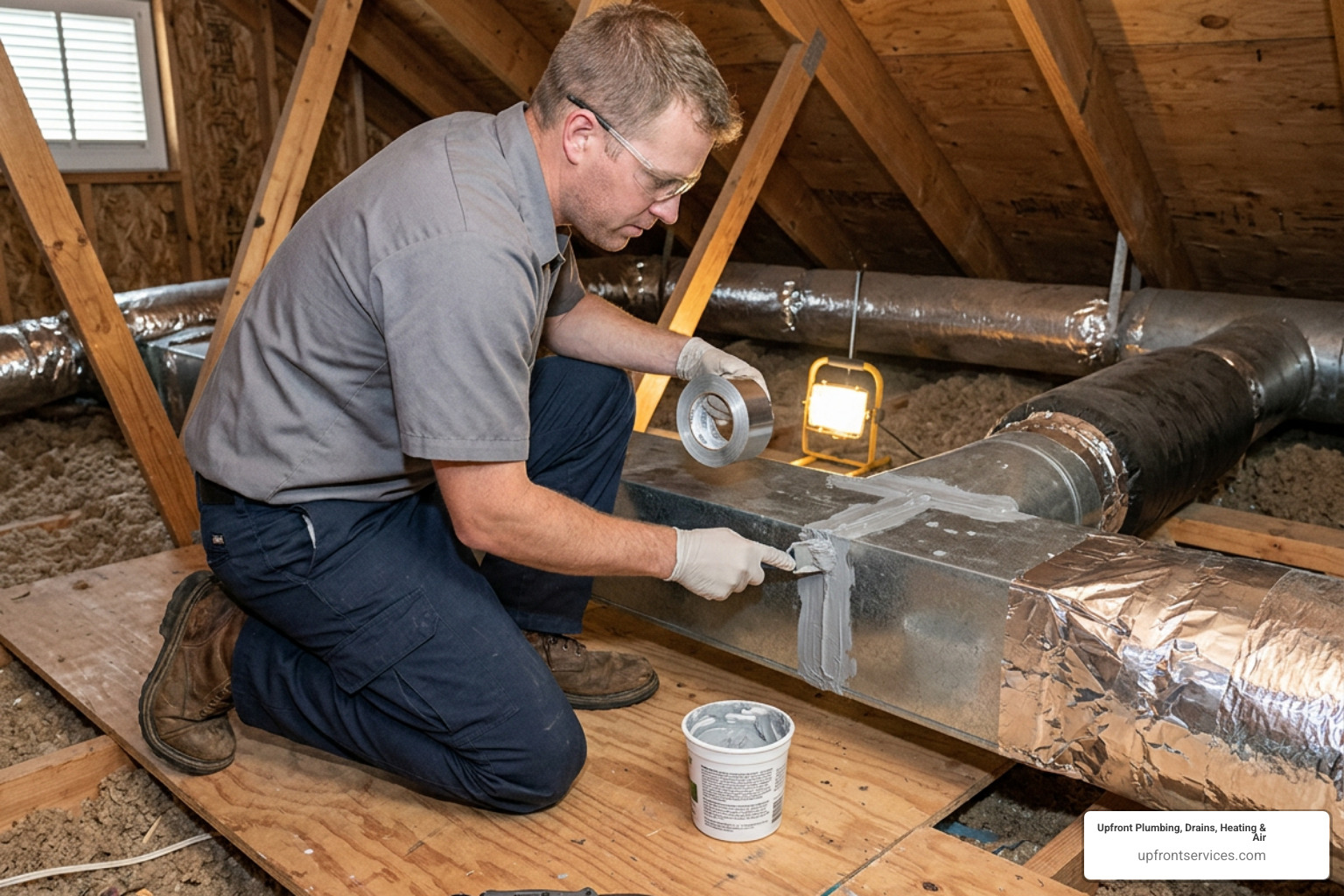
Ductwork comes in several varieties, including rigid sheet metal, fiberglass duct board, and flexible plastic ducting. Each material degrades differently and requires specialized repair methods. For comprehensive solutions, professional technicians utilize industry-grade materials to restore system integrity.
When faced with duct issues, homeowners often wonder if they can get away with targeted repairs or if they need to invest in a complete replacement.
Most residential duct systems have a physical lifespan of 10 to 15 years. Beyond this age, the materials holding the ducts together — such as plastic vapor barriers on flex ducts or old adhesive tapes — begin to break down systematically. If your home is older and the ductwork has never been updated, making targeted repairs can feel like putting a small bandage on a major wound. You might seal one leak only for the increased system pressure to blow open another weak seam further down the line.
However, if your ductwork is relatively young and has simply suffered localized physical damage — such as a crushed section from a cable installer stepping on a line in the attic — a targeted repair is highly cost-effective.
When planning your budget for home comfort improvements, it is helpful to look at the big picture. Read our detailed guide on Replacing Your HVAC in Boise Without Breaking the Bank to see how duct repairs or replacements fit into overall system upgrades.
| Factor | Targeted Duct Repair | Full Duct Replacement |
|---|---|---|
| Average Lifespan | Best for systems under 10 years old | Recommended for systems over 15 years old |
| Scope of Work | Fixing localized leaks, loose joints, or single runs | Removing and replacing the entire distribution system |
| Cost | Budget-friendly, highly targeted | Higher initial investment, long-term savings |
| Airflow Impact | Restores pressure to specific rooms | Completely optimizes airflow and system balance |
| When to Choose | Pest damage, minor joint separation, remodel additions | Widespread mold, collapsed lines, system-wide decay |
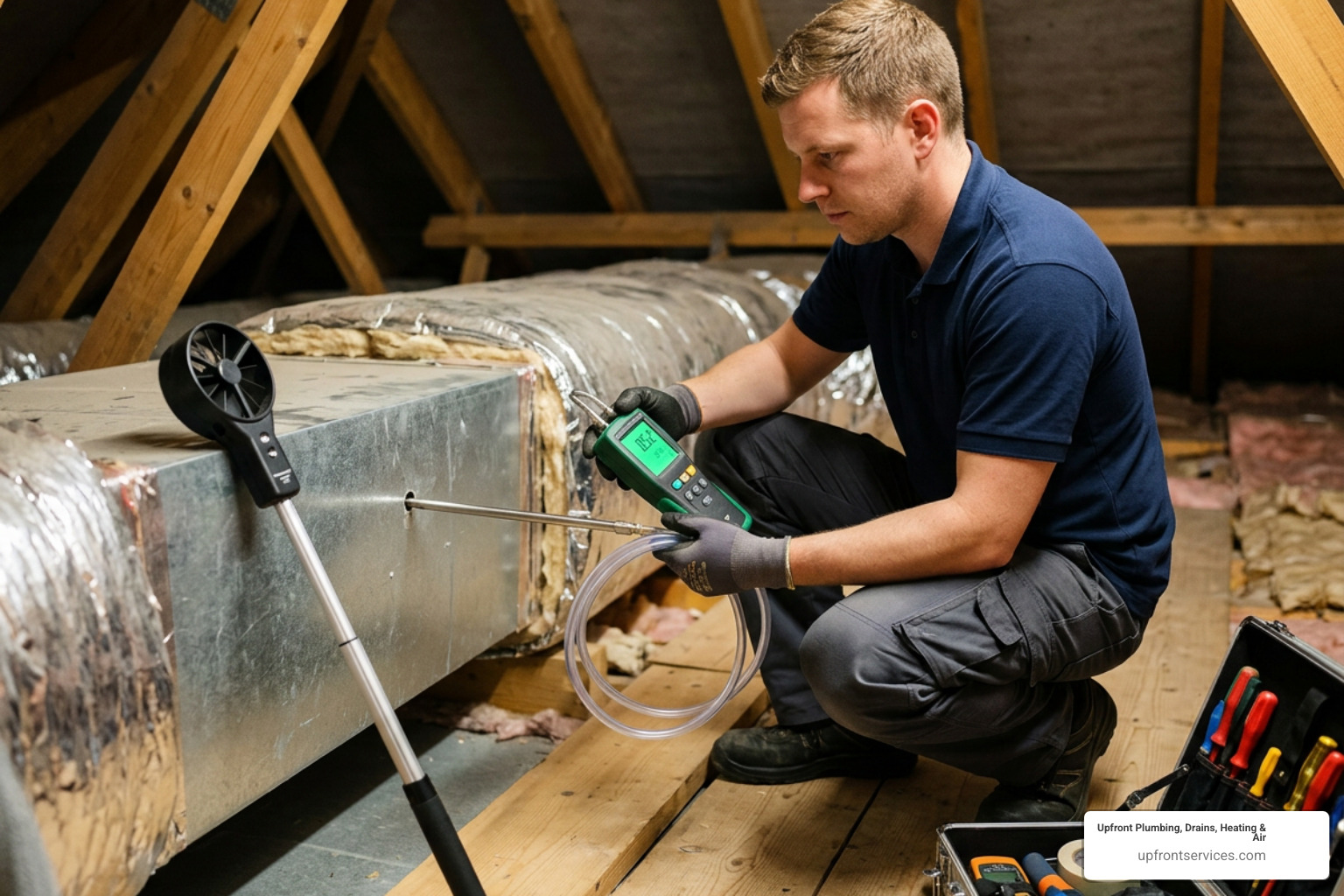
How do you know exactly where your ducts are leaking without tearing down your drywall? Professional HVAC technicians use specialized diagnostic tools to pinpoint issues.
The primary diagnostic tool is a duct blaster test. Technicians temporarily seal all your registers and attach a calibrated fan to your system. By pressurizing the ductwork, they can measure exactly how much air is escaping. This test gives us a precise leakage percentage.
To find the exact location of the leaks, we use thermal imaging cameras and smoke pencils. By running heated air through the system, a thermal camera can instantly show “hot spots” in your attic or crawlspace where precious conditioned air is escaping.
Once the diagnostics are complete, professional airflow balancing is performed. This involves adjusting internal dampers to ensure every room receives the precise volume of air required to keep temperatures perfectly even.
To maintain your system after repairs, implement these simple best practices:
Most homes experience an average of 20 to 40 percent leakage in their air ducts. This means up to nearly half of the money you spend on heating and cooling your home is wasted blowing air into unconditioned spaces like your attic, basement, or crawlspace. Professional duct sealing and repair typically reduces this waste, lowering energy consumption by 15 to 30 percent in homes with significant ductwork problems.
With proper professional installation and regular cleanings, AC and heating duct systems can usually last an average of 10 to 15 years. Over time, the materials naturally degrade due to thermal expansion, pest activity, and moisture. If your system is approaching or has passed the 15-year mark, it is highly recommended to have a comprehensive inspection to evaluate its integrity.
As a general rule of thumb, professional duct cleaning is recommended every three years. However, you should consider more frequent cleanings — once or twice a year — if you have multiple pets, suffer from severe seasonal allergies, have recently completed a major home remodeling project, or notice significant dust buildup on your register grilles.
Taking care of your home’s hidden ductwork is one of the most effective ways to lower your energy bills, improve your indoor air quality, and extend the lifespan of your heating and cooling equipment. When your air flows freely through a sealed, well-designed system, your entire home becomes more comfortable, quiet, and efficient.
When you are ready to restore your home’s comfort and efficiency, you need a team you can trust. At Upfront, we pride ourselves on delivering honest, upfront pricing, top-tier workmanship, and unmatched warranties that give you ultimate peace of mind. We serve Boise, Meridian, Nampa, Caldwell, Eagle, and Garden City with a commitment to quality.
Before hiring a contractor, protect yourself by reading our guide on How to Choose the Best Boise ID HVAC Contractors Without Losing Your Cool. When you are ready to experience the Upfront difference, visit our Upfront Boise HVAC Services page to schedule your professional duct inspection and repair today!
Our licensed team is available 24/7 across the Treasure Valley.

Reach out for fast, upfront service on any plumbing, drain, or HVAC issue — no obligation.
Get a No-Obligation Quote